
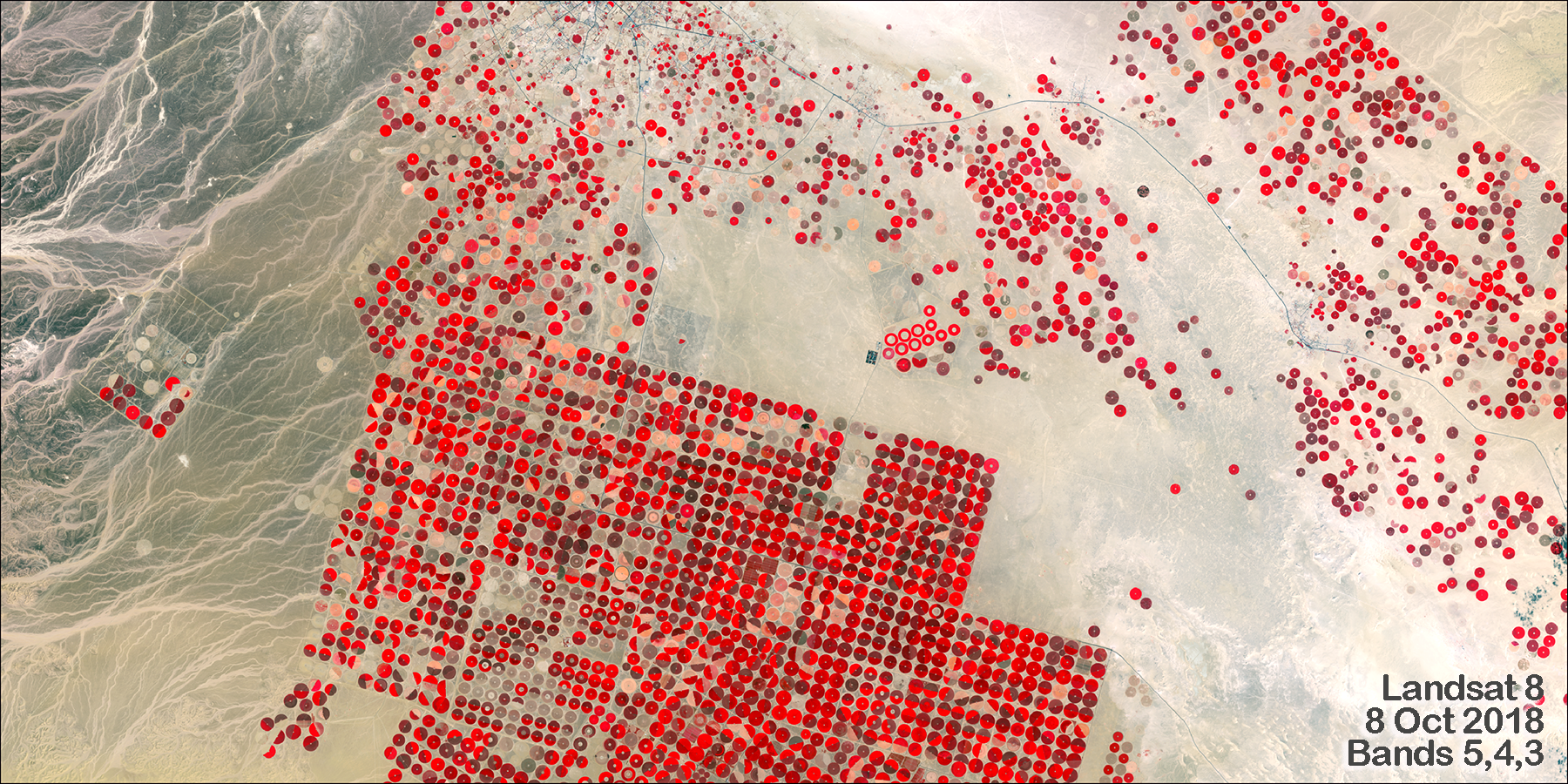
Irrigated fields in Saudi Arabia, seen by Landsat 8 in 2018. False-colour infrared image: vegetation appears red. Michelle Bouchard, using USGS Landsat data. Public domain. Illustrative context; not Hydrosat imagery.
A field can look healthy while some plants are already struggling. Satellite cameras that see light invisible to our eyes could help farmers spot those changes sooner.
In an update published on 18 November, NASA reported that it completed instrument calibration for Hydrosat’s four-satellite Osiris fleet on 30 October. At its Goddard laboratory, engineers exposed eight cameras to carefully controlled light, checking their readings across different colours and brightness levels.
These checks matter because a small change in a measurement needs to reflect something happening on the ground. NASA says combining the cameras’ observations with temperature readings from thermal sensors can help identify crops beginning to dry out.
This is a milestone before launch, rather than evidence that the new fleet is already helping farms.
Your next small step
Explore NASA’s account of the tests and their potential uses on farms.
Go a little deeper
Read the original source: NASA Goddard Space Flight CenterWe separate reported developments from our interpretation of what they could mean. Possibility is not a promise.