
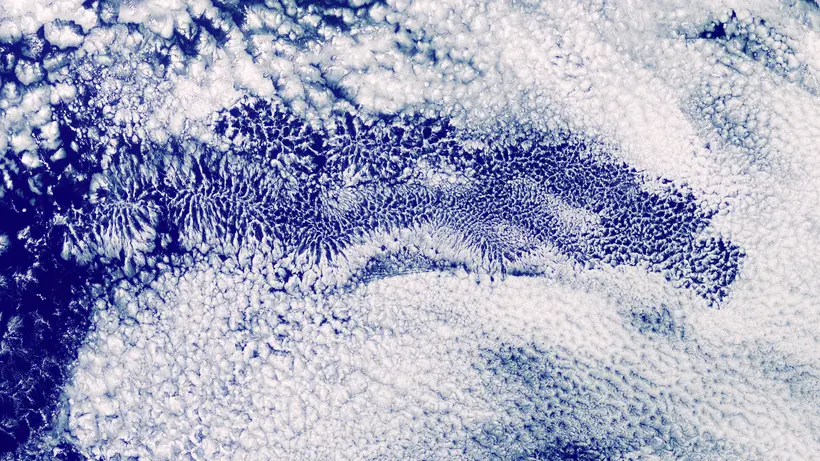
NOAA, via ESA. GOES satellite image of marine stratocumulus clouds over the Pacific Ocean; not an EarthCARE image. Public-domain NOAA imagery.
A blanket of bright clouds over the ocean does a useful job: it reflects sunlight back into space. When gaps open, the darker water below absorbs more energy.
In a 19 November update, ESA highlighted research using its EarthCARE satellite to investigate how those gaps form. Scientists combined views tracking clouds over time with measurements through their layers.
The observations support a process in which rain helps turn a continuous cloud deck into a patchwork. Falling drops remove tiny airborne particles that cloud droplets normally form around. With fewer particles, droplets can grow larger, encouraging more rain and further changes in the cloud.
The study was published in October. It adds evidence about one route to cloud breakup; it does not settle every question about how clouds will change as Earth warms.
Your next small step
Explore ESA’s explanation and the linked research to see what satellites can reveal inside a cloud.
Go a little deeper
Read the original source: European Space Agency; Mayer and colleagues, Atmospheric Chemistry and PhysicsWe separate reported developments from our interpretation of what they could mean. Possibility is not a promise.